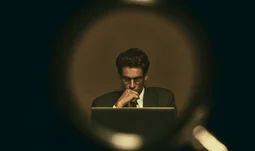
Why Tom Hayes says UBS owes him $400m+
When Tom Hayes left his job as a Yen derivatives trader at UBS in 2009, his boss at the time cautioned against letting him go. Hayes was "very rational" wrote Michael Pieri, a senior macro trader at UBS to Yvan Ducrot, then co-head of the bank's rates business: "I can put him to work on any complicated task, he will identify the key issues/risks and I know he will solve it."
Get Morning Coffee ☕ in your inbox. Sign up here.
Sixteen years later, it's an observation that may come to haunt the Swiss bank. Three months after overturning his criminal conviction in the UK Supreme Court, Hayes' lawyers have just filed a 300 page summons in the state of Connecticut.
The summons says UBS owes Hayes $400m, or more, for "malicious prosecution." This is to cover:
'...the destruction of his career, the inability to work in his profession, the inability to earn a reliable living, the loss of his liberty, the destruction of his reputation, and the emotional and physical harm inflicted upon him and his family, and to deter and punish UBS for its role in intentionally directing the destruction of an innocent man's life for its own selfish reasons.'
Money
Although Hayes told the Bloomberg it's not about the money, the filing notes that he's lost a lot.
Hayes was forced to sell his family home to fund his criminal defence, which has cost him more than $1m. Hayes has been unable to work since he says he was made UBS's "hand-picked scapegoat" for the LIBOR scandal in 2012.
Hayes says he generated $50m in profits for UBS in 2007, 100m in 2008 and $169m in a six-month period before he left in 2009. Absent UBS's intervention, he says he would have earned between $5m and $10m a year "for decades."
When Hayes threatened to leave UBS in 2008, UBS offered him a $2.6m retention bonus which was personally approved by Jerker Johannson, an executive in Zurich, who knew how profitable Hayes was.
Trauma
Hayes developed multiple sclerosis "triggered by the stress endured throughout his prosecution and imprisonment." His wife filed for divorce. He had a breakdown. He was sent to a high security prison full of violent offenders. One tried to kill him; he was assaulted on multiple occasions.
Framing
Hayes says he was framed by UBS. He came from a modest background and is autistic. UBS said he was the "evil mastermind" behind the rigging of the LIBOR rate. Hayes says he was the "perfect fall guy" - a senior trader, but not a manager and "vulnerable, visible, and easily isolated."
Hayes says UBS benefitted from framing him because the bank, "faced severe U.S. penalties (including the potential loss of its U.S. dollar license, which would threaten the stability of UBS's global operations), as well as criminal exposure for its parent entity and senior management."
By cooperating with US prosecutors and offering a scapegoat, Hayes says UBS negotiated more lenient treatment for the bank as a whole. He claims that:
"UBS acted with malice by initiating and continuing the prosecution against Hayes due to the wrong and improper motive of limiting its own civil, criminal, and regulatory liability, and to protect its senior management"
Training
Hayes says he received no formal training at UBS on LIBOR submissions.
Instead, he says he just copied what his managers did and what they taught him. Hayes says he was explicitly directed by Pieri to attempt to influence LIBOR submissions to benefit the Yen Desk's positions. He claims the bank didn't even interview him during its internal investigation.
Visibility
Hayes says he didn't hide what he was doing. Instead, he says everything he did was well known to UBS managers and was common practice in the industry. The filing states that, 'he discussed his requests for changes to LIBOR in writing, at daily meetings with the Yen Desk, and with the Co-CEO of UBS's Investment Bank.'
On the rare occasion that Hayes was told his requests fell outside the norms for Yen LIBOR submissions, he says he always changed them.
Impartiality
'About half of the time, Hayes's requests were made to benefit the other traders on the Yen Desk, who frequently asked Hayes to make requests on their behalf.' The summons says these requests went against Hayes' own trading positions; he didn't gain anything himself.
UBS declined to comment. The bank was not a party to the original criminal proceedings between Hayes and the Serious Fraud Office.
Have a confidential story, tip, or comment you’d like to share? Contact: +44 7537 182250 (SMS, Whatsapp or voicemail). Telegram: @SarahButcher. Signal: sarahbutcher.22 Click here to fill in our anonymous form, or email editortips@efinancialcareers.com.
Bear with us if you leave a comment at the bottom of this article: comments are moderated intermittently by human beings. Sometimes these humans might be asleep, or away from their desks, so it may take a while for your comment to appear. You must take sole responsibility for comments you post on this site. We will take reasonable steps to weed out anything that we consider to be offensive or inappropriate.