Morning Coffee: The most awkward job on the SpaceX IPO. UBS makes cuts to the hottest bankers of a few years ago
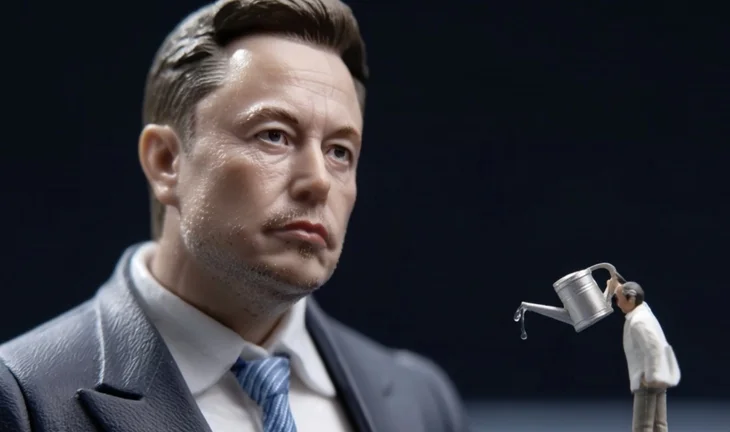
Compared to other investment banking roles, equity research has a lot of good points. It’s intellectually stimulating, it doesn’t have the long hours culture of M&A and the pay, particularly at the top levels, is often very good. But it is not a good job for people with fragile egos, because you cannot do the job without regularly making very public predictions about things which are extremely hard to predict, and thus spending quite a lot of time with people getting mad at you, laughing at you, or doing both, simultaneously.
💥Follow us on WhatsApp for news alerts.💥
This risk might very much be on the minds of the analysts responsible for publishing research on SpaceX ahead of its IPO. While other people in the bank can just make positive noises and Jamie Dimon can stir up investor enthusiasm by calling Elon Musk “The Edison of our time”, the analysts have to come up with numbers. Will SpaceX revenue really reach $474bn by 2030, as Goldman Sachs’ forecasts suggest? Will it be at $3.4trn by 2040, as Morgan Stanley thinks? Or will something completely different happen, and leave the IPO research as a wildly optimistic punchline?
Analysts know that if everything goes well, then nobody remembers but if anything goes wrong, then nobody forgets. They also know that all of the equity capital markets (ECM) and coverage bankers who were once so kind and helpful will disappear when a deal goes bad. And producing even moderately pessimistic projections is harder than compliance training materials might have you believe.
The days when analysts were actually pressured to give super-optimistic projections are past. With a few exceptions, the best bankers know that you can’t do that any more.
But this doesn't mean there's no pressure at all. Being part of an IPO syndicate is a big deal for everyone involved, particularly when it is literally a huge deal like SpaceX. The process involves spending a lot of time with people who really believe in the stock that they’re selling. It's not easy to be the only person in the room who starts pouring cold water on everyone else’s dreams.
Sometimes this has to be done. Skewed coverage to make client feel good is a short-term tactic which always ends up damaging the franchise it aims to protect. And, of course, the difference between a good and bad set of forecasts can only be seen in retrospect.
In the case of SpaceX, though, who really knows whether there might be a million person colony on Mars and whether Grok will become a ubiquitous AI? Much is gut feel. In this case the analysts’ forecasts just don’t matter all that much.
Elsewhere, it really wasn’t so long ago that there was a huge shortage of bankers with experience in sustainability. Regulators even invented the term “competence washing” to describe the practice of faking expertise in ESG investment because it was such a hot area.
These days, however, the only “ESG” that CEOs seem to be interested in is “Energy, Security and Guns”. UBS is reflecting the new and harsher environment for institutionalised financial niceness; its Hong Kong sustainability team has been cut from seven bankers to three.
It’s part of an ongoing restructuring, and might reflect right-sizing post the Credit Suisse integration rather than any underlying loss of interest in the field, A UBS spokesperson declared: “Our ambition to position UBS as a leader in sustainability remains unchanged.” It's just that they are “removing duplication” and “embedding sustainability across the group.”
Even so, ESG bankers will look on this as a warning. There isn’t as much ESG work as there used to be, the world has changed. It might not yet be time to look for another speciality, but limitless demand for sustainability bankers is another thing that’s turned out to be unsustainable.
Meanwhile …
Goldman Sachs is going to be investing heavily in “systematic trading” – the industry term for automated electronic market making, the area in which Citadel Securities and other specialists have taken huge market share from the banks. Goldman wants to get direct access to retail investors’ order flow, which is increasingly important. (IFRE)
However, Citadel Securities is giving them a moving target – it hired Umang Mayani from Goldman’s existing systematic trading operation, as part of a project to increase its footprint in India. (Bloomberg)
American and British lawyers are roasting each other over comparative work ethic, drafting standards and the use of the phrase “Kind Regards” (Legal Cheek)
Andrew Conway has gone from Bank of America, where he was global vice-chair of consumer and retail investment banking, to Citi, where he will be global chair. (Reuters)
Although the base for comparison is complicated because of the April 2025 “Liberation Day” tariffs, Gonzalo Luchetti of Citi says that their Q2 trading revenues are looking strong, across nearly all asset classes. (Bloomberg)
If you believe literally anything you read, you might believe that Silicon Valley escorts are learning about AI and Nvidia GPUs, in order to take a “nerd first” approach to clients who are newly rich from mega IPOs. (NY Post)
Johnny Hilbrant was a personal trainer who invented a “Private Equity Guy” character while impersonating his clients. He now sells $1m worth of merch, personalised videos and brand content a year, and the circle will presumably be complete if he manages to sell out to private equity himself. (Business Insider)