JPMorgan's "aggressive hiring" of PhDs on $200k+ has paid off
As AI continues to captivate the world of technology at large, quantum computing has quietly been making tremendous strides. In banking, where quantum computing shows promise, JPMorgan is way ahead of competitors.
Click here to follow our new WhatsApp channel, and get instant news updates straight to your phone 📱.
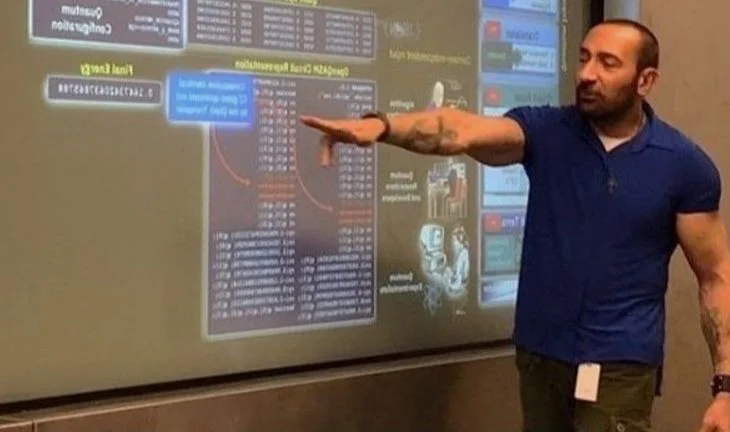
Marco Pistoia, JPMorgan's global head of quantum computing, said at a conference last September that bank had been "hiring aggressively" and had already accrued a "very large team of PhDs, some software engineers and network Engineers."
A report from insights firm Evident confirms this. It says two thirds of quantum job postings come from the bank, and that JPMorgan has published more than half of all quantum related research papers in finance.
Those papers include work on high-speed 'quantum-inspired' algorithms for data searching, and quantum key distribution (QKD) - an increasingly popular form of data protection that JPMorgan CIO Lori Beer said was a top interest for the bank last year. Pistoia said on social media today that the bank's quantum efforts span "every phase of a quantum application lifecycle."
JPMorgan's quantum jobs typically pay ~$135k salaries to associates and ~$315k to executive directors. Pistoia is a former 'Master Inventor' at IBM's Watson research center who joined in 2020. Quantum communications and cryptography is led by ex-University of Singapore professor Charles Lim. Recent recruits include Frank Ling, an executive director in applied research in New York; he came from AWS, where he was a senior applied scientist in quantum networking.
Unfortunately, jobs in the team seem few and far between right now. There's a single opening for a lead security engineer working on post-quantum cryptography, which is based in California and can earn a salary of up to $215k.
A patent filed by JPMorgan last year highlighted quantum computing chips as hardware that could be used in the implementation of generative and agentic AI systems. Given the propensity of GPUs to guzzle tremendous amounts of energy, quantum computing's sustainability could be a game changer; at the Singapore Fintech Festival last year, Pistoia said that a calculation the bank performed using quantum chips (not AI related) was "estimated to consume 30,000 times less energy than [classical computers]." Quantum is still a long way away from being used in AI systems, but Alexandra Mousavizadeh, Evident's CEO, says banks "are laying the groundwork now to gain a competitive edge at the intersection of AI and quantum at this stage."
Widespread adoption may be closer than we think, given the rate of advancements in quantum chip production by Big Tech firms. A few months ago, Google unveiled a groundbreakingly powerful quantum chip called Willow, supposedly over ten septillion times more powerful than the world's fastest supercomputer. Then, in an impressive feat of one-upmanship last month, Microsoft has made its own breakthrough for its new quantum chip by... creating an entirely new state of matter.
Have a confidential story, tip, or comment you’d like to share? Contact: Telegram: @AlexMcMurray, WhatsApp: (+1 269 237 3950). Signal: @AlexMcMurrayEFC.88 Click here to fill in our anonymous form, or email editortips@efinancialcareers.com.
Bear with us if you leave a comment at the bottom of this article: all our comments are moderated by human beings. Sometimes these humans might be asleep, or away from their desks, so it may take a while for your comment to appear. Eventually it will – unless it’s offensive or libelous (in which case it won’t.)