Morning Coffee: The new power move if you’re leaving Citi and want a better job. Last year’s superstar bankers are getting worried
If you’re frustrated in your banking career – perhaps you’ve reached a point at which the only job you can be promoted into is occupied by someone two years older than you who seems to be doing well – then you might start looking for ways to get a promotion by moving to the competition. If there are no vacancies there, then you could consider a lateral move, but if there aren’t any empty seats at your level either, you have two choices.
💥Follow us on WhatsApp for news alerts.💥
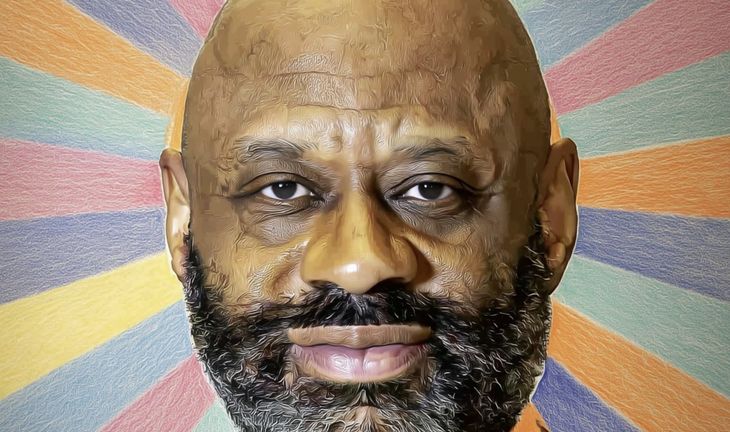
One is to stick around getting progressively more and more bitter, and the other is to resign, take a sabbatical and write a social media post titled something like “Stepping Out Of My Comfort Zone”. Or if you’re Mark Mason and up until recently the Chief Financial Officer of Citigroup, you don’t even need to fire up ChatGPT or break out the book of inspirational quotes, as the Wall Street Journal might do a profile which allows you to announce your availability for bigger and better roles.
Mason does not waste the opportunity, making it clear that he now wants his next job to be as a CEO. Some recruiters are quoted as saying that he will probably have to “go down the food chain in terms of the size of enterprise” to achieve this, but he was probably aware of that risk; there are, after all, fewer than half a dozen banks which aren’t smaller than Citi.
Mason has the right resume for quite a lot of possible roles; he came to prominence in a wealth management business unit, but he also managed a “bad bank” winding down problem assets in the aftermath of the last financial crisis, and has had a key role in trying to sort out the back-office problems which once caused Citi to accidentally pay $900m to the creditors of Revlon. If you’re interested in shrinking something, he’s closed down over 60 business lines and cut around 60,000 jobs.
So why’s he leaving? Well, he isn’t, not immediately; until the end of the year, he’s going to be an Executive Vice-Chair and a senior advisor to Jane Fraser. (Although, since Citi have presumably signed off on the interview, they probably wouldn’t make him work out the whole contract if something big came up). But it seems pretty clear, reading between the lines, that this was a matter of “up or out”. Mason was offered the top job at Carlyle Group in 2023 and turned it down, something which really only makes sense if he had ambitions to be CEO of Citi.
And he might have been, if things had turned out differently; while the big restructuring project was going on, he would have been the natural choice if the board had decided that things weren’t working out and Citi needed a course correction. But things didn’t turn out differently, the board have demonstrated confidence in Jane Fraser by making her Chair as well as CEO. In that sort of situation, it’s best for all concerned to make a fresh start.
Elsewhere, European private credit was one of the hottest labour markets of 2024 and 2025. But the latest news from that market segment feels rather like the scene in Jurassic Park where the characters are wondering “why is the water in that glass rippling?” It’s not just software company loans any more; even private credit funds based on consumer and SME loans are seeing heightened redemptions. And the problems might not be confined to North America.
At industry conferences this week, banks like Deutsche, SocGen and UBS have been emphasising their sensible scale, cautious underwriting and long experience in the market, to make the case that they don’t have a private credit problem. But Bank of America doesn’t believe it, and is pitching a “medium-size short” basket trade of European stocks with private credit exposure which they believe to have 30% downside or more, since they haven’t sold off as much as US peers.
It can’t help that some LBO debt deals are in danger of getting “hung”, and IPOs postponed. This was meant to be a “top decile” year for investment banking revenue, and that may yet turn out to be the case. But it seems that, like a good dinosaur movie, it’s going to give us a few jump-scares on the way to the happy ending.
Meanwhile …
It might be a sign of the times that 51% of buy-side traders are complaining that their biggest source of stress, fatigue and burnout is the internal technology that they have to work with. That’s almost twice as stressful as compliance (27%), and much worse than annoying brokers and counterparties (17%) or even career uncertainty (25%). But an ice-cool 11% of traders claim that they don’t feel any stress at all. (Bloomberg)
UBS has completed the transfer of Credit Suisse clients in Switzerland onto their own IT systems, so far without major issues. The integration team had apparently got into the habit of ringing cowbells to celebrate major goalposts. (FT)
One of the main reasons to have co-heads is that if one goes, you still have the other. So it’s potentially quite interesting that both of the “co-managing directors of real assets” responsible for private markets at the Australian sovereign wealth fund are leaving simultaneously. (Bloomberg)
Charlotte Nutting has joined Capula to be its new head of central execution trading, after six years at Millennium. Capula is apparently beefing up its execution team; it’s got a vacancy advertised for a trader in New York. (Financial News)
JPMorgan is setting up an “athletes’ council” with some of the biggest names from professional sport, to help it create products that take sports stars from college to retirement and beyond. (Business Insider)
While some Asian firms are reinstating work-from-home arrangements in order to save money on rising energy prices, bankers in Bangladesh are even being asked to take the bus rather than drive private cars into work. (Daily Star)
Have a confidential story, tip, or comment you’d like to share? Contact: +44 7537 182250 (SMS, Whatsapp or voicemail). Telegram: @SarahButcher. Signal: sarahbutcher.22 Click here to fill in our anonymous form, or email editortips@efinancialcareers.com.
Bear with us if you leave a comment at the bottom of this article: comments are moderated intermittently by human beings. Sometimes these humans might be asleep, or away from their desks, so it may take a while for your comment to appear. You must take sole responsibility for comments you post on this site. We will take reasonable steps to weed out anything that we consider to be offensive or inappropriate.