Hedge fund Schonfeld's CEO says AI will change data jobs
It's a new year on the Gregorian calendar, but some things are the same. It's still winter. People in winter are still talking about which jobs will be frozen out by AI.
Get Morning Coffee ☕ in your inbox. Sign up here.
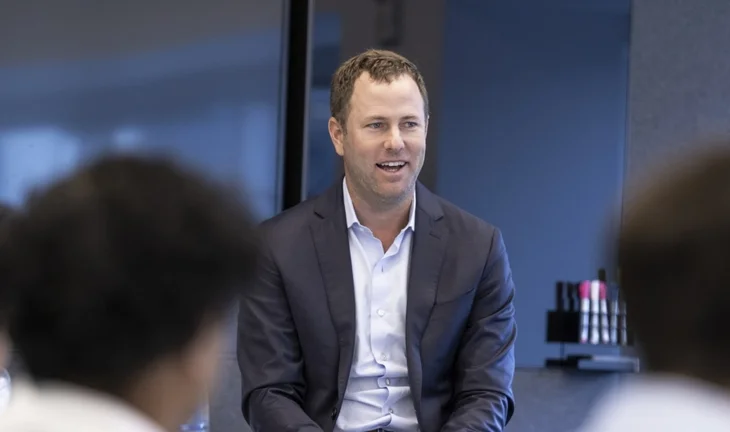
Ryan Tolkin, CEO of hedge fund Schonfeld Strategic Advisors, has been talking about AI and jobs. Speaking on the Generating Alpha Podcast, Tolkin suggested that data analyst jobs will most susceptible to the AI freeze.
"We have tons of people today who used to spend a lot of time organizing data," observed Tolkin on the podcast. "If programmed effectively, that can be done in a fraction of the time."
Tolkin, who is not to be mistaken with Tolkien, and who became CIO of Schonfeld aged only 27 after a period on the credit desk at Goldman Sachs, did not explicitly say that Schonfeld hopes to organize its data with fewer people using AI. It's possible that the same number of data analysts could do more.
Tolkin did say that data is critical to hedge funds' edge. Being able to effectively differentiate or separate signal from noise is “critically important” to generating alpha, he said. There's so much "data and information," that success is about understanding which data and information is important and which data and information is irrelevant.
Recently filed accounts for Schonfeld's UK business showed the firm employing 30 portfolio managers and 25 technologists, plus another 26 operations professionals.
Citadel CTO Umesh Subramanian said last year that AI is a tool for funnelling information to portfolio managers. It's a "force multiplier," said Subramanian: AI will make the best portfolio managers more effective, but it won't transform poor performers into alpha generators.
Speaking on the podcast, Tolkin also discussed heavy competition for hedge fund talent and his approach to life. Echoing Dmitry Balyasny, he said that running a successful hedge fund is partly about creating somewhere people want to work. You need "waving fans" as employees who will attract new recruits and once you've got people you need to retain them. “We depend upon doing the simple things right and creating a culture where people are proud to wear the Schonfeld jersey.”
Tolkin said he gets up at "some ungodly hour" to exercise and tries to prepare his days ahead, but that he has learned to accept that he may "get punched in the face" by unforeseen occurrences. Now aged 38, he has four children aged 9,7, 5 and 3 and they also "throw curveballs" into the mechanism of his days.
Tolkin said that his personal edge comes partly from having seen so many financial crises. At Goldman, he was on the desk during the financial crisis and saw first hand how the firm's risk and pricing analytics system allowed it to understand and trade against its exposures while other banks were struggling to calculate losses. Like Ken Griffin, he's a fan of Goldman's culture: “Goldman did an amazing job in terms of giving people an opportunity to be successful at a young age if one was able to deliver outcomes.”
When he attends meetings, Tolkin says he is prepared by a chief of staff and by other members of his team. This is important to him. “I want to be the most prepared person in that meeting. I want everyone in that meeting to know that I have prepared for that meeting,” he says declaratively.
Have a confidential story, tip, or comment you’d like to share? Contact: +44 7537 182250 (SMS, Whatsapp or voicemail). Telegram: @SarahButcher. Signal: sarahbutcher.22 Click here to fill in our anonymous form, or email editortips@efinancialcareers.com.
Bear with us if you leave a comment at the bottom of this article: comments are moderated intermittently by human beings. Sometimes these humans might be asleep, or away from their desks, so it may take a while for your comment to appear. You must take sole responsibility for comments you post on this site. We will take reasonable steps to weed out anything that we consider to be offensive or inappropriate.