Morning Coffee: 26-year-old Rothschild analyst outperforms Morgan Stanley MD. Collateral agents seem important now
James Faucette has been around. He began working as an analyst in 2000, joined Morgan Stanley in 2014 and made managing director in 2020. He's Morgan Stanley's head of fintech research and he is based in New York.
Get Morning Coffee ☕ in your inbox. Sign up here.
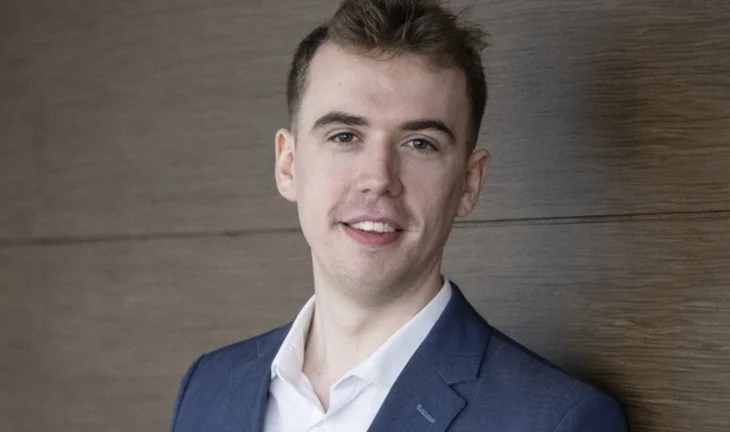
Dominic Ball has not been around as much. He's 26 years-old and graduated from the UK's university of Exeter in 2021, where he was part of a squash society. He began working for Rothschild in London four years ago, and became a vice president in February 2025.
Ball, however, has proven far more right than Faucette about the stock of Fiserv, a Wisconsin payments company whose stock fell 47% this week after what Bloomberg described as a "massive earnings shortfall."
While Faucette - and most of the other 37 analysts covering Fiserv - were big fans of its double-digit revenue growth and bought into its boasts about an "unrivalled set of assets, a world-class client portfolio, a dedicated leadership team," 26-year-old Ball was not so sure. Ball told Bloomberg that when he spoke to the people actually using Fiserv's unrivalled products (specifically a payments system called Clover which is expensive and a "nightmare" according to Reddit), all was not so shiny as it seemed. Fiserv itself also discovered this to be true when it appointed a new CEO earlier this year, who peered under the bonnet and discovered the issues - prompting the share price crash.
The 26-year-old Ball, who spoke to Fiserv's disgruntled users, is therefore now vindicated. The circa 50 year-old Faucette, who maintained his buy rating on Fiserv in late September, with a price target of $179 (it's currently $69), is not.
It's not clear who Faucette was talking to, but sometimes looking beyond a company's own statements helps. This applies equally to Fortune, which has nominated Fiserv one of its Most Admired Companies for 10 of the last 11 years.
Separately, if you're looking for a job where you will surely have work for years to come, you could maybe become a collateral agent.
Collateral agents offer an array of bureaucratic-sounding custody jobs in which they manage the collateral used to secure loans. Now that collateral is not always what it seems, they are having a moment.
Semafor notes that the collateral agent for Carriox, an entity affiliated to Bankim Brahmbhatt, a telecoms services provider, is suing the company after it became apparent that the collateralised contracts Carriox provided for its loans were probably faked. The Wall Street Journal says BlackRock and others are owed $500m after their private lending arms extended loans against the shady collateral.
This follows the bankruptcy of First Brands, a car parts supplier, which also stands accused of borrowing against fraudulent invoices.
Investigating the validity of collateral seems a strong career now. Many of the jobs at Alter Domus, which acted as collateral agent for Carriox, seem to have more to do with preparing reports and working with "cross functional stakeholders", though.
Meanwhile...
Millennium is investing $5bn in private markets. It will focus on relatively less liquid corporate and asset-backed debt, real estate and low-correlation strategies but stay away from direct lending. It presumably needs to hire a team. (Bloomberg)
Ex-bankers are being paid $150 an hour to train AI models to replace them. Consultants are only getting $110. (Bloomberg)
Conor Hillery, head of EMEA M&A at JPMorgan, feels very excited about next year. He is saying things like: "We’ve had headwinds blowing in the face of M&A for the last 18 months and now we have lower rates, a better view on valuations and a backlog of deals to get through.” (Bloomberg)
David Solomon at Goldman Sachs doesn't seem so optimistic. He says: “If we continue on the current course and we don’t take the growth level up, there will be a reckoning.” (Bloomberg)
The Federal Reserve's supervision and regulation division is being cut to 350 people, down from a previously authorized head count of 500. (WSJ)
SocGen's global markets revenues only rose 0.5% in the third quarter and its equities revenues fell 7% while other banks' equities businesses did well. The bank said the prior year was "very strong." (Financial News)
Optiver hired Oliver Chapman from Barclays and Ian Schneider from Morgan Stanley as it expands its equities business. (Financial News)
A team of convertible bond traders at hedge fund LMR made a 30% return. They include Dubai-based Seb Gorga (once an associate at Morgan Stanley) and Zurich-based Vincent Olekhnovitch. (Bloomberg)
Snowflake's chief revenue officer appeared in an Instagram and TikTok video with "theschoolofhardknockz" and said that Snowflake will exit the year with just over $4.5 billion in revenue and that "we're getting to $10 billion in a couple of years." The company then had to file an 8k saying people should take notice. (Business Insider)
Would you buy a 40 year-bond to help Meta invest in AI? (Financial Times)
Only 2% of Gen Z are interested in achievement, learning and an unbridled desire to work. (WSJ)
Hamptons houses worth more than $10m are selling like hotcakes in a surge that exceeds the pandemic boom. (WSJ)
Have a confidential story, tip, or comment you’d like to share? Contact: +44 7537 182250 (SMS, Whatsapp or voicemail). Telegram: @SarahButcher. Signal: sarahbutcher.22 Click here to fill in our anonymous form, or email editortips@efinancialcareers.com.
Bear with us if you leave a comment at the bottom of this article: comments are moderated intermittently by human beings. Sometimes these humans might be asleep, or away from their desks, so it may take a while for your comment to appear. You must take sole responsibility for comments you post on this site. We will take reasonable steps to weed out anything that we consider to be offensive or inappropriate.