Morning Coffee: $350k for hedge fund professionals to escape Dubai. Networking in the style of Blue Owl executives

What is the price of getting out of Dubai and other Emirates in this situation (presuming that you actually want to, of course)? That depends who you ask and how much you want to pay.
💥Follow us on WhatsApp for news alerts.💥
At the top end, Semafor says private jets can be chartered from the relatively safety of Riyadh in Saudi Arabia for the price-gougey sum of $350k. “Saudi Arabia is the only real option for people who want to get out of the region right now,” explains the man chartering them. This appears to over three times the norm. You have to get to Riyadh first.
At the middle end, the Financial Times says you can charter a 13 person plane from Oman to Paris for €215k. If it's only you, you can get a single seat from Oman to Milan for £20k. You also have to get to Oman first.
At the bottom end, the WSJ says a handful of flights have begun leaving major hubs in the UAE. When they war started, commercial airlines initially said they were only cancelling flights until this afternoon (Tuesday). Exits are minimal.
As we reported yesterday, traders in Abu Dhabi have been staying on the ground floor of the Ritz Carlton hotel in case of bombs. The Financial Times spoke to 'an executive at a large global hedge fund', who said they were "exploring how to evacuate people" and that, “It’s pretty scary — this is going to have implications for some of my guys . . . The trade was not that you were getting exposed to geopolitics when moving to Dubai." The Financial Times spoke to another hedge fund fund manager who said he was playing Padel with his daughter on Saturday when he heard "the boom-boom-boom of explosions over our heads" and that his daughter "saw a missile fly behind some building." - "It was pretty intense," he reflected. And yet, by Sunday evening "there [was] no sense of imminent danger . . . the atmosphere [was] very calm”.
With the UAE no longer the risk-free-tax-free airconditioned-paradise that it recently was, it's possible that fund managers might demand a danger premium to move there. In the new context, Citadel's slowness to open a base in the Emirates suddenly looks wise.
Hong Kong could benefit. So could London. And yet, many financial services professionals in the region remain upbeat. "You have to understand that people don't want to come to London because the perception is that it's high-cost, high-tax, high crime," one finance professional in the Middle East tells us. The war could be the route to a "new Middle East," he adds. "Peace and prosperity. We don't want to be surrounded by destabilising neighbours. Let's see."
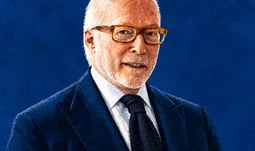
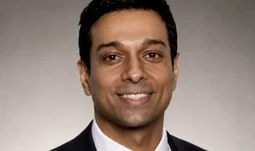
Separately, the WSJ reveals the self-promotional and networking tactics of the executives who have become extremely rich at private credit firm Blue Owl.
Doug Ostrover, a former junk bond salesman and Blue Owl's co-chief executive, reportedly bragged about his working class roots while he worked for Blackstone around the time of the last financial crisis. He decorated his office there with a photograph of his grandfather's Manhattan smoked fish shop and wore a Timex Iron Man digital watch whilst urging modesty when meeting pension funds.
Marc Lipschultz, Ostrover's fellow chief executive at Blue Owl, had a different approach. He decorated his office with Phish memorabilia and his collection of rare Air Jordans. Ostrover began his career at Goldman Sachs and is reportedly a master networker who hurries across restaurants to greet colleagues of yore and builds relationships with executives at university endowments.
Either technique seems to work. Lipschultz and Ostrover each invested $250m of their own money in Blue Owl's predecessor Owl Rock Capital. Not withstanding Blue Owl's current pains, they are both billionaires.
Meanwhile...
Privately, both the UAE and Qatar are working to quickly improve their air defense capabilities. Qatar’s stocks of Patriot interceptor missiles will last four days at the current rate of use. (Bloomberg)
Redemption requests from an $82bn Blackstone private credit fund rose to 7.9% of its assets. This is above the 5% threshold that allows Blackstone to limit investor payouts. Blackstone paid the requests in full. (FT)
Wealthy investors don't want to put their money into private credit now. Their commitments slid 40% to $3.2bn in January compared with December. (FT)
Lloyd Blankfein's advice on avoiding a financial crisis. “I would be very aggressively marking to market, making people sell certain things that even if they’re liquid, try just to make sure you could.” When he was Goldman CEO, Blankfein says: "we were constantly challenging our traders to sell into the market, to see what the true value and what the market rate was for what they were accumulating.” (FT)
Lloyd Blankfein says the "horses are starting to whinny in the corral." - "I wonder where there’s hidden secret leverage...Now everyone says, ‘Oh, the world’s not leveraged.’ That’s exactly what everybody said in the mortgage crisis until you suddenly discover that there was a lot of mortgage risk in Iceland...It sort of smells like that kind of a moment again.” (Telegraph)
Citadel is up 2.9% in year-to-date 2026. Dymon Asia is up 10.2%. (Business Insider)
The emerging markets hedge fund boom is over. "I think the EM trade is a big risk now. There is a lot of leverage in the system. [Funds betting on gains] in EM equities and fixed income have been a very easy one-way trade and I think it will be hugely challenged. It will have implications for the whole hedge fund community.” (Financial Times)
Igor Abramov, the head of compliance at Capula, says he received pushback from senior Capula executives when he sought information about artwork and private-jet expenses that had been charged as pass through expenses to the Capula Multi-Strategy Master Fund Ltd. Capula fired him and says it did so for valid reasons. He says he was retaliated against. (Bloomberg)
SocGen hired Selina Cheung from UBS as head of equity capital markets in Asia Pacific. (Bloomberg)
The chief executive of the Alternative Investment Management Association (AIMA), which represents hundreds of hedge funds, says UK government plans to scrap non-competes are a bad idea. They “would weaken the UK’s global competitiveness by stripping away a key safeguard for intellectual property and confidential business information”. (Telegraph)
Last year, JPMorgan financed the $55bn takeover of Electronic Arts. This year, things aren't so upbeat at the banks' leveraged finance conference. (Bloomberg)
Have a confidential story, tip, or comment you’d like to share? Contact: +44 7537 182250 (SMS, Whatsapp or voicemail). Telegram: @SarahButcher. Signal: sarahbutcher.22 Click here to fill in our anonymous form, or email editortips@efinancialcareers.com.
Bear with us if you leave a comment at the bottom of this article: comments are moderated intermittently by human beings. Sometimes these humans might be asleep, or away from their desks, so it may take a while for your comment to appear. You must take sole responsibility for comments you post on this site. We will take reasonable steps to weed out anything that we consider to be offensive or inappropriate.