Morning Coffee: The wittiest quant describes how AI is changing his job. Iliad wrestling parties are a thing

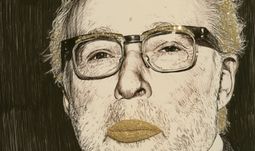
Giuseppe Paleologo, the head of quant research at Balyasny, is know for his puckish sense of humour and social media musings. He’s now posted a very interesting thread, detailing his experiences in using LLMs (specifically, OpenAI’s Sol and Astra) to address one of the great curses of quant investing – the problem of “crowding”.
This is the phenomenon created because lots of quants are using broadly similar mathematical tools to process the same datasets, so they tend to come up with the same answers. Which means that you occasionally get situations in which a particular portfolio is very heavily held by systematic investors. That means that when something goes wrong, and all the quants try to sell out of their positions at the same time, there isn’t enough liquidity for them all to do so, and they end up losing a lot more money than they expected to.
Modelling this phenomenon is obviously really important, but it’s difficult; Paleologo had tried several times in the past without success. It seems that the Astra model was able to achieve some kind of breakthrough – he says that “the final report is about 35 pages long. Years of thinking coming to a conclusion. Qualitative and quantitative productivity improvement.”
You might see this as a pretty sinister prospect, in which the honest men and (some) women of quant investing are likely to be replaced by robots. That’s not what Guiseppe Paleologo thinks. As he points out, Astra needed him to tell it that crowding was a problem in the first place, and to describe what a solution would look like. The machine can find elegant mathematical solutions, as he puts it, but the human beings are needed to bring together the “dirty engineering problems”.
In fact, it might be the case that even though AI models are rapidly solving the “Millenium Problems”, that doesn’t necessarily mean that they will be able to solve Millennium’s problems. Or Balyasny’s, or Citadel’s, or any other financial employer which has to deal with markets as they are – messy, extremely human systems, which have to interact with the real world all the time, and where lots of the most important data isn’t available because it’s proprietary, secret or otherwise non-public.
That also seems to be the view of Dan Taylor, the CIO of Man Systematic, another big quant hedge fund. “At the margin”, according to him, the availability of LLMs is already changing the skill sets that he’s looking out for when hiring. And before long, we might even see humanities graduates in systematic investing firms. When the ability to find elegant solutions to big systems of differential equations starts to be democratised, the quant firms will need people who are capable of understanding the markets and thinking of interesting questions to ask.
For the moment, then, the more worldly kind of quant – people like Giuseppe Paleologo, who don’t mind getting their hands dirty with real world problems – shouldn’t worry too much about their future.
Elsewhere, the more that people report on Leopold Aschenbrenner and the Situational Awareness hedge fund, the clearer the picture grows of a subculture in which absolutely extraordinary behaviour seems to be regarded as normal. According to an “associate” of Aschenbrenner’s, the parties at which people talked about buying a galaxy were also events where guests “would drink wine, read passages from The Iliad, strip naked, and grapple with one another”.
Amjad Masad, the CEO of Replit, says that “If you go to a San Francisco party, it is really inscrutable to an outsider”, which seems like quite an understatement. As well as the naked wrestling and Greek poetry, the AI-adjacent scene is full of people who believe that the economic singularity is at hand, and so they only have five years to make enough money to ensure that they will be part of the permanent overclass, rather than the permanent underclass. Which might explain why Aschenbrenner used so much leverage, and why his investors seem to have encouraged him to do so.
But, as legendary trader John Arnold puts it, “Every trader needs a come-to-Jesus moment … you have to lose at some point early on and learn humility. The alternative is a feeling of invincibility”. Situational awareness is important, but self-awareness is absolutely vital.
Meanwhile …
Even hedge fund managers find it difficult to afford to live in Geneva. Millennium Management wants to increase its presence there, to attract more high-net-worth investors who don’t fancy the trip out to its main Swiss office in Zug. But in order to make it work, they want to get a tax deal with the local authorities. (FT)
Truist, the regional heroes of the south-east USA, are growing their investment bank. They have hired Cem Altuntas to cover insurance brokers and Jeffrey Davis to do healthcare coverage. (Bloomberg)
Narayanan Mahesh has gone from Jefferies to be head of equities electronic execution for the Americas at Citigroup. (The Trade)
It seems much longer, but it was only eight years ago that DWS decided that it needed separate branding from Deutsche Bank. Fortunes have changed over that period, and now it’s come back; “Deutsche Asset Management” will be the new name. (FT)
The world of international drug dealing is apparently big enough to have its own shadow banking system, made up of “brokers”, who facilitate international transfers of money that doesn’t want to go through an AML process. Except there are now a lot of vacancies in that part of the industry, as a lot of them got arrested in a major Spanish police operation. (Europol)
One of the most important things which will determine how well you get paid is whether you have access to a network of information to give you a good estimate of your market value. College football kickers seem to have an excellent set of WhatsApp groups, and it’s helped them achieve unprecedented pay and scholarship packages. (WSJ)