How has continuous professional development and international work experience opened up a world of opportunity for this CIMA-qualified finance professional?
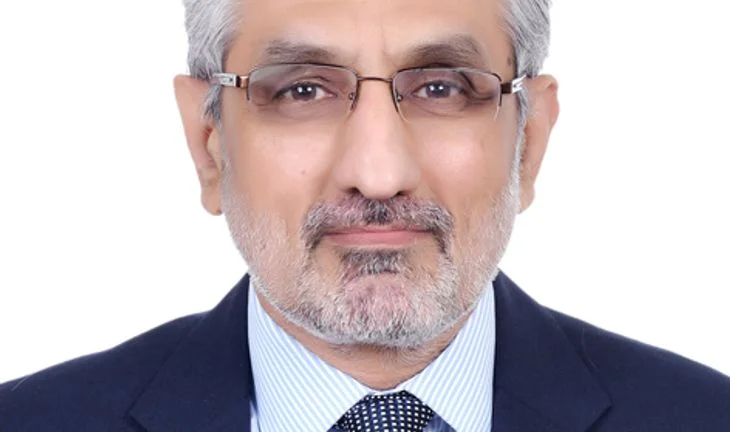
“I have always believed in continuous professional education, whether that’s via in-person courses or web-based training,” says Ejaz Malik, FCMA, CGMA, Finance director at Siemens Energy. After attending a Government Primary School in Waulah, Pakistan, a village about 150 kilometres from Islamabad, he graduated from the Government College of Commerce in Rawalpindi in 1990 before taking up a Finance Trainee position with Siemens in Pakistan.
“After 14 months of learning, I became a permanent full-time Siemens employee. I was the commercial officer, handling the finance activities of the company,” Malik says. After 10 years and numerous promotions, he accepted a new position with the company in the Middle East, working for Siemens in Saudi Arabia. “Every professional needs to grow in their career and this was also my plan, so I was also looking for some international exposure,” Malik says.
Career growth options
Malik has also continued to execute his other strategy for career growth, continuous professional development, throughout his time working in both Asia and the Middle East. “During my time with Siemens in Pakistan, I completed my MBA. Even when I moved to Saudi Arabia and my working life was very busy, I completed short courses and in-house training with my company,” he says of his interest in lifelong learning. “But I was looking for something to advance my career - to go from the managerial to the strategic level. My aim was to update, not only my technical and business skills, but also my people and leadership skills - I wanted to move to the next level.”
This is how he came to enroll in the Chartered Institute of Management Accountants’ (CIMA) Global C-Suite Business and Finance Programme in October 2019. The course has enabled Malik to continue to develop his skills and knowledge, while also gaining a globally recognised qualification.
The accelerated entry route is open to CFOs, CEOs and senior management that wish to gain a CIMA professional qualification. It involves taking a 4-day workshop and passing a final exam. When combined with a successful membership application, it qualifies executives for direct entry to CIMA membership and to obtain the prestigious Chartered Global Management Accountant (CGMA) designation. “I explored various options, but when I came across this programme, I realised it was the perfect tool for any finance professional who wants to survive and thrive in this profession,” Malik says.
Embracing the digital transformation
He believed the qualification would give him a unique combination of competencies and skills that he couldn’t find elsewhere, including technical, business, leadership, people and digital skills. The latter has, in fact, been one of the most valuable areas of the course, according to Malik. “I believe technology and digitalisation will be a game changer for the finance profession and for general business management also,” he says. “Even more so now, due to the ongoing effects of the pandemic, digitalisation will be applied to business much faster than any of us expected.”
In order to stay ahead of the game in professions such as finance, therefore, Malik believes that learning about and adopting digital technologies like artificial intelligence, data analytics, and robotic process automation (RPA) is crucial. “The organisations that adopt these technologies quickly will gain a competitive advantage and outperform slower competitors,” he says. “The CIMA qualification provides information and tools that help me to better understand digital technologies. By adopting a digital mindset, we will be able to properly implement these innovations.” Malik is already looking at how to automate various processes that are part of their daily activities as a result of the RPA knowledge he has gained on the course.
Assessing the benefits
In more general terms, Malik believes CIMA fast-track programmes such as the C-Suite Programme, provide participants with two kinds of benefits. In addition to financial benefits such as increased earning potential, the qualification also brings non-financial advantages such as boosting the quality and precision and providing new knowledge and skills. “I believe that the non-financial benefits of this course - the skills and experience in data-driven decision making, for example, or the appraisal, strategy and communication skills - are already helping me in my day-to-day business life,” he says.
Malik had four main expectations when he first enrolled with CIMA at the end of 2019. He hoped to continue his professional development, while also broadening his vision as a strategic business partner. He also wanted to remain up-to-date on the transformational changes happening in the finance profession, while at the same time gaining recognition of his experience and skills on a global level. “So far, my experience has exceeded my expectations,” he says. “CIMA courses like those I have undertaken provide you with all of the resources to develop your skills and knowledge in relation to the future requirements of the profession.”
Not only that, but he also believes CIMA helps its members to reshape their financial careers, both as employees and in providing the tools to take the next step in their careers. This could be an international move or perhaps setting up a consultancy or advisory practice. Indeed, he adds: “Having a CIMA designations after your name opens up a world of opportunity.”