It is not Investec's style to make redundancies

Investec is watering the plants that are growing fastest and keeping the others in survival mode.
In a market update, the London and Johannesburg-listed South African bank has just reported strong growth in its capital markets and asset management divisions, while private banking is still struggling with high impairments due to customer defaults.
Third party assets under management have grown 17% to 86.4bn. Annual profits, to be announced in May, are expected to be higher than last year's 410m.
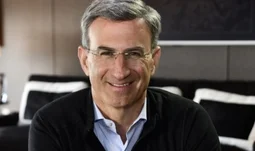
"The group's asset and wealth management businesses have gained significant momentum, reporting a strong increase in their contribution to group earnings," chief executive Stephen Koseff said. "The group's geographical and operational diversity has supported a sound operational performance."
The last year has seen a rise in cost-to-income ratio, largely due to increased headcount, Koseff said, but the ratio is still within the target and, while cost-cutting will continue across the board, it will not impede the search for talent.
"We are recruiting and will continue to recruit in growth areas, particularly our capital markets and asset management divisions which are performing well," says Ursula Nobrega, head of investor relations at Investec in Johannesburg. "Our recruitment policy is commensurate with our growth strategy and it is always selective: we would never announce a blanket 10% increase or for that matter a 10% decrease in headcount. Selective hiring in growth areas is key."
Even the one division which is not performing, private banking - still profitable in South Africa but not in the UK and Australia - is not going to see staff cutbacks.
"There will be no massive headcount reduction, it is not the Investec style," says Nobrega. "We prefer to rely on natural attrition in the private banking division but clearly in the short term there will not be a headcount increase either, as strategically it would not make sense."
Investec tries to be nimble and adapt its strategy to changing market conditions. An agility that is particularly needed now that, as Koseff puts it, "the world's a bit upside down. There's a lot of volatility out there."