A Q&A with the king of quants

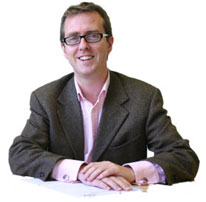
We asked quantitative finance overlord Paul Wilmott what the future holds for quants following the financial crisis. Are their services still required? And if he weren't putting his quant skills to use in the financial sector, where would he be applying them instead?
1) Given exotic structured products are no longer the hot topic they were, have prospects for quant careers gone dramatically downhill?
There will always be a need for quants. You can't go backwards to some kind
of pre-quant dark ages: the scientific genie is out of the bottle.
Don't forget that people have remarkably short memories: I expect that we will go back to the old status quo a lot faster than most people think. I am willing to bet that there will be a return to exotic instruments over the coming months and years, and therefore a need for even more quants. Things will rapidly go back to pre-crisis normal.
Note that I'm not saying that this is a good thing: this crisis has been wasted, both in economic and quant research terms. There are some really good risk management models and valuation techniques around - there have been for decades - but people stick with what they know.
Quants are currently regrouping and looking at how to make modeling and risk management better, but there won't be any paradigm shifts unfortunately.
2) Where will quants be needed in investment banks in future?
Algorithmic trading is a big user of quant skills.
Quantitative techniques are also being used in previously qualitative areas such as M&A. For example, it's possible to build models that value two companies in isolation and then look at their value when combined. This highlights things like the benefits from economies of scale for example, or the downside from rebranding. Once banks have a taste of what mathematics can do, it's difficult to go back.
3) Which disciplines should quants specialise in if they want to ensure their future employability in financial services?
Common sense. And in appreciating it's not all about the mathematics.
4) You designed and run the Certificate in Quantitative Finance, is this an alternative to a mathematical MSc or a PhD?
In my opinion, yes. I am not a great fan of all the MScs or PhDs which are focused on financial mathematics. I feel that they have transformed mathematical finance into a very abstract branch of probability theory, and crowded out all the physicists, chaos theorists, applied mathematicians and engineers who have something equally - if not more - valid to add. And you've seen where this has led us.
The CQF is all about creating rounded quants, and quants who are streetwise. It teaches the ideas of modeling, but it also teaches that the models are fallible. At every stage, we warn our students of the dangers of putting too much trust in them. It's about taking a pragmatic approach and using the right maths for the job. Unlike most financial Masters courses, we don't complicate things unnecessarily. Nor are we dumbing the maths down. But we are teaching a healthy degree of skepticism.
Whenever I come across a quant who has done a financially focused Masters or PhD, my heart sinks. They are taught a very limited set of mathematical tools, and come out thinking that's what it's all about. It isn't. The CQF teaches a much wider range of maths than you get on a Masters's programme, and we find many banks would rather hire someone with the qualification than with a finance Masters or PhD.
5) Are most students of the CQF working in finance already?
Most students on the CQF are already working in finance, and the qualification is paid for by their employers. We have great support from banks and hedge funds. What we don't see so much of on the CQF are the regulators, which seems curious given regulators ought to know at least as
much as the people they are regulating.
6) Have you noticed any reduction in the number of people studying the CQF since the financial crisis began?
On the contrary, numbers are up 30% on just six months ago.
7) If you weren't specialised in financial services, which industry would you personally like to apply your quantitative expertise to over the next five years?
I'm an applied mathematician. I trained in physical science long before I became a financial engineer, and have worked on all sorts of different problems.
I think economics and other social sciences are desperately crying out for some common sense from applied mathematicians. Why are we still debating the merits of communism versus capitalism, or different schools of economic theory? This sort of thing should have been resolved years ago.
Equally, climate change offers an interesting discipline for applied mathematicians.