GUEST COMMENT: There will be light at the end of the tunnel

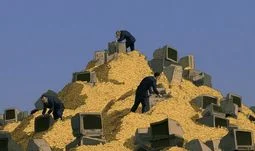
The freshest entrée on Wall Street's menu at the moment is, sadly, layoffs. Hundreds of Lehman's bankers are still in limbo. Merrill and Bank of America may get rid of 20,000. Around 2,000 of Dresdner's investment bankers will be eliminated when the merger with Commerzbank is completed in a few months. Citigroup has cut at least 10% of its investment bankers. Even the mighty Goldman Sachs has taken the axe - as it should - to its worst-performing bankers. The list goes on and on. As longtime investment banker Roger Altman has written, "Investment banks always overhire in the good times and overfire in the bad times."
The last purge on Wall Street bankers followed the bursting of the technology bubble and the September 11 attacks, when close to 20% of the workforce was eliminated. Back then, I was one of the many senior bankers sent to Wall Street's dustbin for no good reason other than JPMorganChase needed heads and mine was a well-compensated one.
My firing was made all the more difficult by the fact that it came towards the end of that particular wave and whatever senior-level jobs that were out there had long been filled by the time I needed one. My former bosses at JPMorganChase did me no favours either.
How do you recover in your mid-40s, with a family to support, from such a devastating blow to your wallet and your self-esteem? Can someone making seven figures on Wall Street ever hope to replace that kind of income with a job outside the financial sector?
The answer to both these questions is, unfortunately, "only with great difficulty". The truth is that no profession on earth pays its rank-and-file as well as the securities industry does. Superstars on Wall Street are paid astronomically well. But those who simply work hard, put in the time, generate revenues and are adept politically can also find themselves highly compensated. The Faustian bargain, though, is that when times get tough - and that may be an understatement these days - Wall Street executives give nary a second thought to lopping off the very bankers who were lauded and rewarded the year before. Wall Street is the ultimate Darwinian environment.
For my part, after I had wasted months chasing down nearly every nibble that would keep me on Wall Street, I came to the realisation that, as Jean-Paul Sartre would say, Les Jeux Sont Faits. It was time to move on.
For me, this meant doing some hard thinking about how best to combine the insights I had gained about human nature and capitalism during my 17 years as an investment banker with my first love - journalism and writing. The hard work and passion I had once lavished on advising my corporate clients on their M&A deals I now poured into painting portraits of what life is really about on Wall Street.
The seven-figure income is gone, but so are the debilitating politics of the internecine Wall Street snake pit, the overnight flights to Europe, and the late nights spent redoing pitchbooks on a colleague's whim. Best of all, I am now free of bosses who made it their mission to make themselves look good at the expense of others. Losing one's job in mid-life for no good reason is brutal and unfair. But it can also be the catalyst for something better. I used to tell myself that investment banking was good one day a year. I was right.
William D. Cohan, the author of The Last Tycoons: The Secret History of Lazard Frères & Co., is working on a new book, House of Cards, about the demise of Bear Stearns.