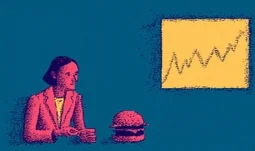
Short selling

What is it?
Short selling is a handy way of making money when the value of something is on the way down. The opposite of short selling, or 'going short', is 'going long' - namely, investing in something whose price is on the way up.
While going long is a relatively simple procedure involving buying something whose price you expect to rise and selling it once this has happened, short selling is a little more involved. The process is as follows:
1) Borrow the thing you expect to fall in price (eg, 10 shares of MegaCorporation, currently valued at $100 each).
2) Sell the thing you've borrowed (sell 10 MegaCorporation shares for $100 each).
3) Wait until its price falls (wait until MegaCorporation shares are down to $50).
4) Buy the shares back in the open market (buy back 10 MegaCorporation shares at $50 each).
5) Give the shares back to the original lender and pocket the difference (make a profit of $500 on your MegaCorporation transaction).
There's also a variation on this theme known as 'naked short selling', which is when you don't actually borrow the shares to begin with (or even establish whether you could borrow them if you wanted to), but sell them anyway.
Short selling is nothing new. It was pioneered by an Amsterdam shipowner in 1609 and was prevalent around the time of the South Sea Bubble and the Wall Street crash of 1929. Short sellers are typically hedge funds.
What's it got to do with the financial crisis?
Short sellers are widely blamed for driving the price of banking stocks down and for causing banks like Bear Stearns and Lehman Brothers to go under, and Merrill Lynch to rush into the arms of Bank of America.
David Einhorn, owner of Greenlight Capital, a US hedge fund, is the best known short seller allied to Lehman's fall. Einhorn took a large short position in Lehman in July and raised questions about the bank's balance sheet.
Regulators around the world have taken steps to curb short selling. The US Securities and Exchange Commission (SEC) imposed a temporary ban on naked short selling of 19 named financial stocks in July and August of 2008.
Both the UK Financial Services Authority (FSA) and the SEC went further in September 2008, banning any kind of short selling of these banks in the UK and these banks in the US. The regulators justified their move on the grounds that short sellers were 'hunting in packs' and looking to bring down otherwise viable institutions. In July 2009 regulators resurrected talk that they might crack down on short-selling by reinstating an important brake known as the "uptick rule." The uptick rule requires traders to wait until a stock "ticks up" before they can short it. That prevents "bear raids" in which short-sellers can pile on to short a stock until it's all the way near zero.
However, evidence suggests that short sellers weren't to blame for the fate of banks like HBOS and Lehman, as only a small proportion of their shares were being shorted when they went under.
Last updated on 7 September 2009.