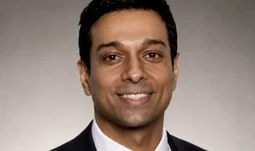
Q&A: Jonathan Jones, head of recruitment, Goldman Sachs EMEA

What does it take to get in? Is an internship imperative? And is Goldman Sachs really hiring more people in 2008?
Q: Rumour has it that some banks have filled their 2008 graduate programmes with summer interns from 2007. What's the situation at GS?
We're hiring as usual. We generally make offers to 70% of our summer intern class. 90% of those typically accept and we then find that between one half and two thirds of our full-time places are accounted for by people from the internship programmes. This remains the case for 2008 - we're looking for between 100 and 140 additional people to supplement the interns who have accepted our offer.
Are you hiring more or fewer graduates in 2008 than 2007?
Hiring is currently very healthy. We expect to hire around 10% more graduates in 2008 than this year - around 375 in Europe. This is about as high as our intake has ever been.
Will those recruits be from Western Europe or elsewhere?
Our business is expanding across Europe, the Middle East and Africa, and we need to adapt our hiring strategy to meet that. Most of the new roles will be in London because that's where our EMEA headquarters is, but we work with an increasingly diverse client base and therefore need to hire a more international group of students.
What's the most common reason for you to reject someone?
There are two key stages where people fall out of the process, and it is worth differentiating between them - the CV stage and the interview stage.
In terms of screening CVs, the most common reason for rejection is that someone does not show the history of excellence and achievement we look for - defined both by academic success, as well as success in a variety of other pursuits, from the arts to public service and work experience.
At the interview stage, it is difficult to generalise or to point to a single reason. What we are looking for are candidates who can communicate with poise and skill and who would make us feel comfortable about bringing them to a critical meeting on the first week of their job. If we don't feel that about you, it doesn't bode well for your application.
We are also looking for the right level of self-confidence. We're definitely put off by arrogance, nor do we want people who are so nervous that they cannot perform. Quietly self-assured is how I'd mark the sweet spot.
Describe the best candidate you've interviewed so far during this recruitment season.
I can only really describe in general terms as interviewing hasn't kicked off yet. Anyone with a striking achievement history, both academically and in sports, the arts or public service will be impressive.
We're looking for someone who can present and communicate with impact in an interview. At the end of the day we also want someone we can have a conversation with - we'll ask ourselves whether this is someone we want sitting next to us and we want to be comfortable that the answer is yes.
What advice would you offer someone who hasn't completed a summer internship and has no finance experience?
Firstly, we never hire graduates because of the knowledge they have from day one. We want to hire people who can convince us that they have an interest in the work, but it needs to be an educated interest.
Whether or not you have a finance background, it is important to do some homework.
This can be done in three ways: come to company presentations where you can meet firms in the industry, and learn as much as you can about the work and the structure and nature of the business; do as much background reading as you can so that you understand the world of current affairs and have informed views about what you see and hear; and talk to company alumni and peers who've spent time in banking - both can be an incredibly rich source of information.
If you do this, there is no reason why you should not get into a graduate programme without an internship.
Would you encourage someone to study an MSc?
Taking a graduate degree is an exceptional and laudable endeavour. But I wouldn't encourage someone to study a Masters purely to bolster their chances of getting a job in our industry. Generally speaking, people will be successful if they have the right fundamental ingredients.
Which schools do you target at undergraduate level?
With the size of our recruiting team, getting out to every campus is not possible, but it does mean we are able to actively solicit applications from around 60 universities in the UK, Europe and Africa. This includes universities like Manchester, where our European co-CEO Michael Sherwood, an alumnus, recently made an address.