Lessons in time management

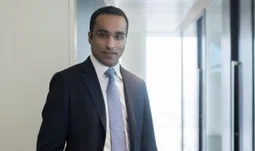
David Christie, a director of Priority Management City, which specialises in time management in financial services, says it is becoming more important to manage time effectively. 'As people are made redundant, those left behind have more to do and with fewer resources,' he says.
A managing director at a European bank says increases in the number of clients per head can leave less time for strategy and management. Clients must either be weaned off the idea that a senior banker will be available whenever they need them, or bank staff must cease doing unnecessary tasks.
Responding to irrelevant e-mails and attending badly structured meetings top the list. Both are a favourite topic for time management experts. When faced with an e-mail, Christie advises his clients to adopt one of four 'Ds': deal with it dump it defer it delegate it. Meetings, says Christie, should be run according to an action plan: know who is there, know why they are there, and ensure that individuals who are only relevant to items eight and 10 do not have to sit through the entire thing.
Many banks send staff on time management courses, which suggests they are well aware that staff often spend their time unproductively. A 10-year study published recently in the Harvard Business Review by Professors Sumantra Ghoshal of the London Business School and Heiki Bruch of the University of St Gallen in Switzerland, found that a mere 10% of managers are models of purposeful and focused behaviour. The remaining 90% fall into one of three groups. Some are procrastinators, with low levels of energy and focus. Some are disengaged, with high levels of focus but low levels of energy. Most, however, are distracted - well-intentioned souls with a tendency to confuse any kind of activity with constructive action.
Choosing the right things to focus on is therefore vital. Mark Forster, life coach, time management guru and author of the book Get Everything Done and Still Have Time to Play, says: 'You can do anything if you put your mind to it. But you can't do everything.'
Staff should be clear about the distinction between action and activity. Action achieves goals, moves the business forward and actually gets the job done. It is rewarding, but difficult and challenging. Conversely, much activity - such as sending e-mails and attending meetings - appears easy to achieve. It may convey the impression of industriousness, but achieves very little.
The gurus agree that one of the most important time management techniques is the ability to say 'no'. Veronica Munroe at High Performance Coaching, who works with senior staff at investment banks, says poor time management often comes from an inordinate desire to please. 'Pleasing people all the time means individuals are not focused on what they want to achieve,' she says.
Alec Mackenzie, author of the time management classic The Time Trap, says: 'The inability to say 'no' means not knowing how, or not having the emotional fortitude to refuse.'
To say 'no' to your boss effectively, you should remind him or her of your other projects, point out that they are the boss's projects, too, and ask for help in deciding where the new assignment should fall on the list of priorities, advises Mackenzie.
When a valid task has been identified, a finite period of time should be assigned to its completion. 'Work will expand to fill the available time. The longer the hours that you work, the more that work will fill the time,' says Forster. He advises staff to decide in advance what time they will leave the office. Until then they should follow the best natural rhythm for mental work: 90 minutes' work followed by 20 minutes' break.
Even the most assiduous adherents to natural rhythms may find their time management awry unless something else is also in place.
Ghoshal says purposefulness is not so much the result of good time management as good intention management. While procrastinating, disengaged and distracted people rely on the outside influences to determine their activities, the purposeful are driven by a sense of personal volition. They are committed to their job, and derive a real sense of meaning from it.
In a study of behaviour in a US investment bank, Ghoshal found that the most purposeful people were those with a real belief in what they were doing.